
Rugby is hard on clothing. Jerseys are grabbed, pulled and dragged through mud every week, and shorts take constant strain in scrums and rucks. A cheap rugby kit can tear in the first month. For clubs, schools and rugby brands, getting the construction right matters as much as the design. This guide explains what to look for when ordering custom rugby uniforms.
What Makes Rugby Kit Different?
Compared with soccer or basketball, rugby uniforms need:
- Stronger fabric that resists tearing when grabbed.
- Reinforced seams, especially at the shoulders, collar and underarms.
- A close fit, so opponents have less loose fabric to hold.
- Grip-friendly panels on some jerseys to help with lineout lifting.
Rugby Jersey Fabrics
Heavyweight polyester
Modern rugby jerseys are usually made from heavier, tightly knitted polyester. It is tough, dries quickly and holds sublimated colours well. A heavier knit stands up much better to grabbing than a light football fabric.
Polyester with elastane
Adding stretch gives a body-hugging fit that is harder to grip and moves with the player. This is popular for competitive teams and sevens.
Traditional cotton-blend
Classic collared rugby shirts in heavy cotton or cotton-polyester are still made for supporters, leisurewear and heritage-style teamwear. They are less practical for match play but popular for club shops.
Fit Options
- Classic fit – a little looser, comfortable for recreational and social teams.
- Pro fit – tight to the body with stretch fabric, harder for opponents to hold.
- Women’s fit – shaped through the body and shoulders for women’s teams.
Collar style is another choice. Many modern jerseys use a low or grandad collar, while traditional teams may want a full collar with buttons.
Construction Details That Matter
When you compare manufacturers, ask about:
- Stitching type – flatlock or twin-needle seams in high-stress areas.
- Taped shoulders and collar to stop seams from stretching.
- Bar-tacking on stress points.
- Double-layer panels on the shoulders or chest for extra strength.
These details add little to the cost per piece but make a big difference to how long the kit lasts.
Rugby Shorts and Socks
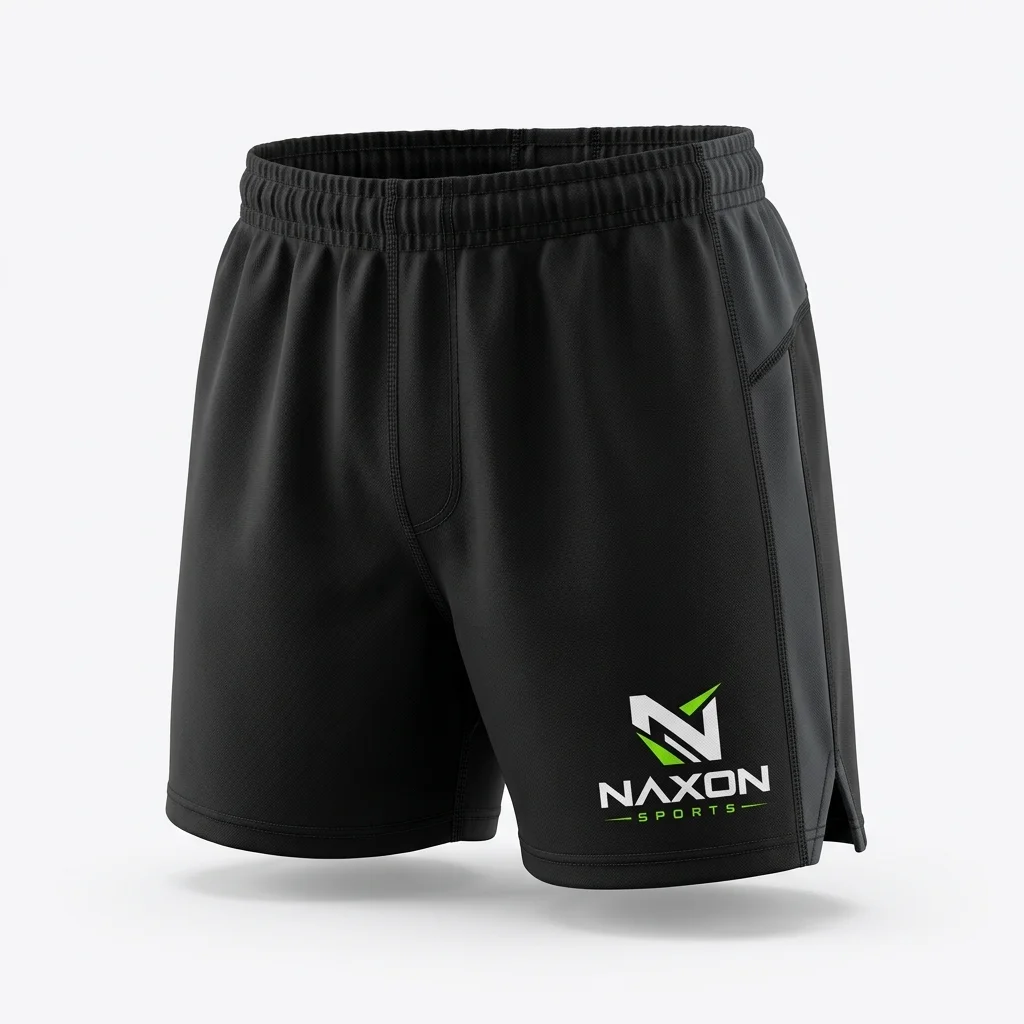
Rugby shorts are usually made from a strong twill or heavy polyester, with a reinforced crotch and a strong drawcord waist. Some teams add elastane for stretch. Matching socks complete the kit; ordering them together keeps colours consistent across the whole uniform.
Decoration
Full sublimation is the most common choice for match jerseys because it allows any colour or pattern with no extra cost per colour, and the print cannot crack or peel during contact. Embroidered crests or sponsor logos give a premium finish but add weight. Our guide to sublimation, screen printing and embroidery compares the options.
Numbers, Names and Sponsors
Rugby numbers are usually large and placed on the back, with smaller numbers on shorts for some competitions. Check your union or league rules on number size and sponsor placement. Send a roster with names, numbers and sizes so each jersey is made correctly first time.
Training Kit and Supporter Wear
Many clubs order training tops, hoodies, tracksuits and supporter shirts alongside match kit. Ordering these together means artwork and colours stay consistent, and the cost per piece is often lower. Club shops can also sell supporter versions to raise funds.
Sizing for Rugby Teams
Rugby squads include very different body types, from props to wingers. Use a detailed size chart, ask each player to measure, and consider ordering a size set before bulk production. Mixed sizes, including youth sizes, can be combined in one order.
Minimum Order and Lead Time
At Naxon Sports, rugby uniforms start from 30 pieces per design, with sizes mixed. Plan your order early in the off-season, so there is time for sampling and approval. Our lead times guide breaks down each stage.
Browse our custom rugby uniforms or see all custom team uniforms.
Frequently Asked Questions
What is the best fabric for rugby jerseys?
A heavyweight, tightly knitted polyester, often with elastane for stretch. It resists tearing, dries quickly and holds sublimated colour well.
Are sublimated rugby jerseys durable?
Yes. The design is dyed into the fabric, so it will not crack or peel, even after heavy contact and repeated washing.
Can you make matching shorts and socks?
Yes. We can produce full kits including jerseys, shorts and socks so colours match across the uniform.
How to Order From Naxon Sports
- Send your design, logo or a design number from our catalogue on WhatsApp or by email to info@naxonsports.com.
- Get a price and a free digital mock-up, usually within 24 hours.
- Approve a sample to check fit, fabric and print. Sampling usually takes 5–7 days, and the sample cost is adjusted in your bulk order.
- Bulk production usually takes 2–5 weeks, with quality checks, followed by door-to-door shipping worldwide.
Get a Quote From Naxon Sports
Naxon Sports is a B2B sportswear manufacturer in Sialkot, Pakistan, working with clubs, gyms, distributors and private label brands worldwide. Send us your design, quantities and destination and we will reply with a clear price, fabric options and timeline. Request a quote or message us on WhatsApp.